
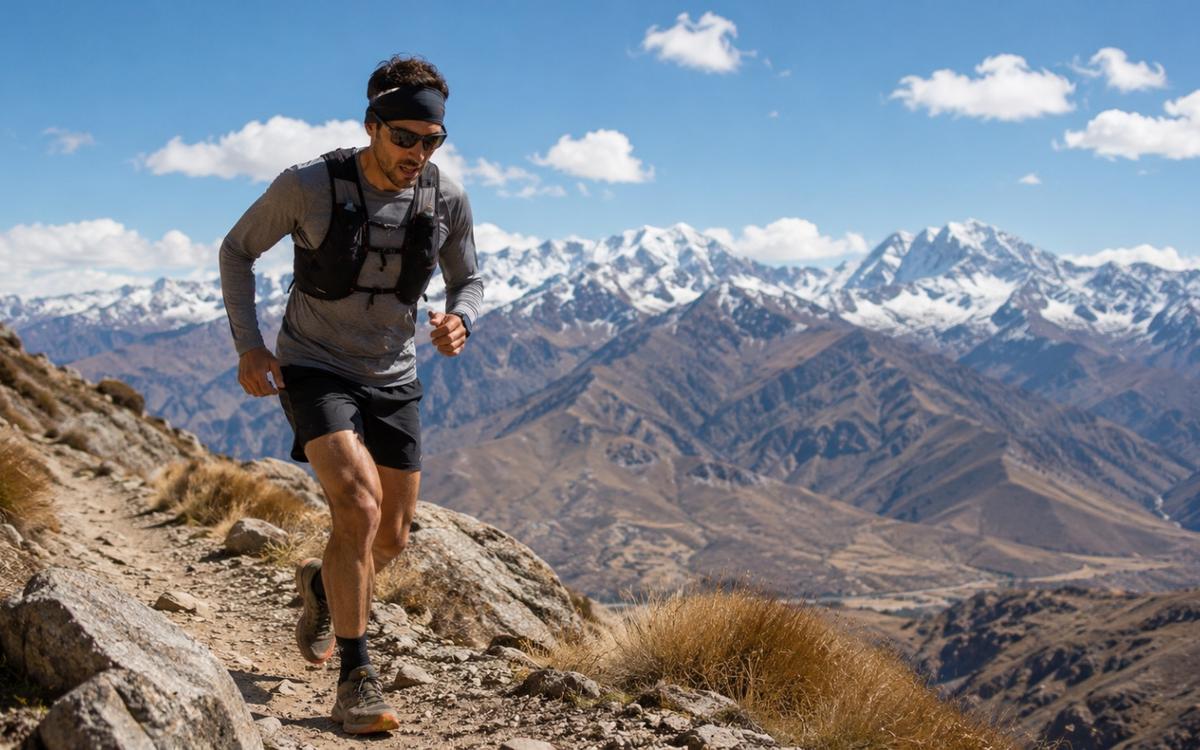
Running at altitude requires careful pacing and timing your arrival to handle thinner air effectively.
How altitude affects your running
At elevations above 1500 meters, oxygen availability decreases, causing your body to work harder for the same effort. Research shows VO₂ max, a key factor in endurance, drops by roughly 2% for every 300 meters climbed. This means a race in high-altitude cities like Mexico City or Boulder will feel significantly tougher than at sea level, even if the terrain appears similar.
You’ll notice increased breathing rates and heart rates for the same pace. These physiological changes mean you can’t race the same way you do at lower elevations.
Planning your arrival: timing matters
When racing at altitude, how long you stay before the race can influence your performance and well-being.
- Arriving less than 24 hours before your event can help you avoid acute mountain sickness symptoms because your body hasn’t begun the acclimatization process that triggers them.
- On the other hand, staying for 10 days or more before race day allows your body to adjust to the thinner air, improving oxygen delivery.
- The tricky part is the 2 to 7 days after arrival. During this period, you may experience symptoms like headache, nausea, and fatigue without significant acclimatization benefits. It’s best to avoid racing during this window if possible.
Planning your trip with these timing options in mind can help you minimize health risks and perform closer to your potential.
Adjusting your race pace at altitude
Expect to slow your pace compared to sea level. At around 2000 meters, it’s typical to add 3% to 5% more time per kilometer to your usual pace. The pace reduction will be more significant at higher elevations.
Since your heart rate will be elevated even at easier efforts, don’t try to maintain sea-level heart rate zones. Instead, focus on perceived exertion and adjust based on how your body feels.
Tips for pacing at altitude
- Start slower than you would on a flat course to conserve energy.
- Use shorter intervals of harder effort interspersed with easy running to prevent overexertion.
- Monitor your breathing and avoid pushing into breathlessness too early.
- Allow for more walking on steep, extended climbs if the course includes them.
Supporting your altitude race preparation
Beyond pacing and arrival, consider these additional steps:
- Hydrate well before and during your stay; altitude increases fluid loss.
- Prioritize rest and avoid intense training after arrival until you gauge your acclimatization.
- Eat nutrient-rich foods to support recovery and energy.
Summary
Racing above 1500 meters means facing thinner air, lower oxygen, and increased cardiovascular strain. To race smart, plan your arrival either right before the event or well in advance, expect slower paces, and adjust your effort to how your body responds. Paying attention to these details helps you stay healthy and get the most from your altitude race experience.
Racendo can help you organize all aspects of your race journey, including altitude-specific preparation, so you can focus on running calmly and confidently.