
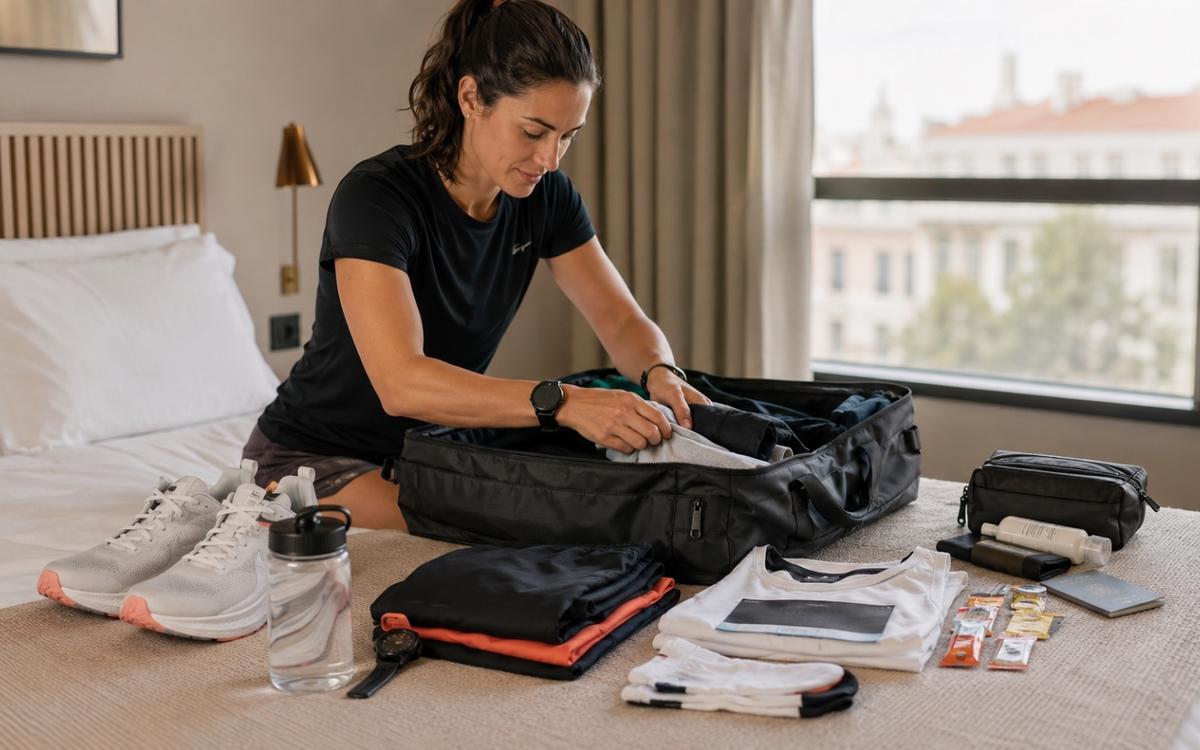
A marathon weekend is not only about the race.
It is travel, timing, kit, documents, food, weather, sleep, nerves, logistics and recovery. The run itself may be the main event, but the weekend around it can decide whether the runner arrives calm or stressed.
Packing well is one of the simplest ways to protect the preparation already done.
It does not make anyone fitter.
It does not replace training.
But it removes avoidable problems.
No runner wants to arrive at a hotel and realize the race socks are missing. No runner wants to discover that the bib pickup confirmation is buried in an inbox. No runner wants to buy unfamiliar gels at the expo because the tested ones were left at home.
A good marathon packing list is not about bringing everything.
It is about bringing the right things.
Start with the race essentials
The first rule of marathon packing is simple.
Pack the items you cannot easily replace first.
Race shoes, race kit, watch, fuel and documents should be treated as essential. If traveling by plane or train, these items should stay in hand luggage when possible.
A lost suitcase is frustrating. A lost suitcase with race shoes inside is a much bigger problem.
Race essentials include:
- Race shoes
- Race socks
- Race shorts or tights
- Race top or singlet
- Sports bra if needed
- Race bib if already collected
- Race belt or safety pins
- Running watch
- Watch charger
- Heart rate strap if used
- Fuel tested in training
- Cap or sunglasses if needed
- Gloves or arm sleeves if needed
- Anti-chafe product
- Blister protection if normally used
The goal is to avoid needing to buy anything new for race day.
A marathon is not the best time to test replacement socks, a different gel, new shoes or unfamiliar clothing.
Pack for the weather you may get, not only the weather you want
Weather forecasts can change.
A marathon weekend packing list should include a plan for the likely conditions and a small backup for the conditions that would cause problems.
A cool, dry forecast still deserves a rain option. A warm forecast may still include a cold start. A destination race may feel different from training at home because of wind, humidity, shade, sun or waiting time in the start area.
Weather-related items to consider:
- Light rain jacket
- Disposable poncho or old layer for the start
- Warm layer for before the race
- Gloves
- Arm sleeves
- Cap
- Sunglasses
- Sunscreen
- Vaseline or anti-chafe product
- Dry socks for after the race
- Warm clothes for after the finish
- Small towel
- Plastic bag for wet clothes
The race kit itself should still be tested and familiar.
Backup items are there to manage waiting, weather and recovery, not to create a new race-day outfit at the last moment.
Pack your fueling before anything else gets complicated
Fueling should not depend on what the expo sells.
If gels, chews, drink mix or bars have been tested in training, pack enough for the race and a little extra.
Race weekend can create small surprises. A gel can leak. One can be dropped. Breakfast may be delayed. A train may take longer than expected. The race may start later than planned.
Fueling items to pack:
- Race gels, chews or fuel
- One or two extra servings
- Pre-race snack
- Breakfast items if traveling
- Electrolytes if used
- Drink mix if used
- Small bottle if needed before the start
- Post-race snack
- Food for travel day
- Backup familiar snack
Do not use race weekend to experiment.
If something has not worked in training, it does not become safer because it is sold at the race expo.
Save and pack race documents
A marathon weekend often includes more documents than runners expect.
Some are digital. Some may need to be printed. Some may only matter if something goes wrong.
The key is to keep them easy to access.
Save offline and pack if needed:
- Race confirmation
- Bib pickup QR code
- Registration number
- ID or passport
- Medical certificate if required
- Travel tickets
- Hotel booking
- Insurance details if traveling
- Emergency contact information
- Start area map
- Race guide
- Bag drop information
- Course map
- Public transport information
- Post-race meeting point
For digital documents, take screenshots.
Do not rely only on links.
At large races, mobile networks can become slow. Apps can log out. Emails can be hard to find. A screenshot of the QR code is often the fastest solution.
Pack for race morning
Race morning should feel simple.
That starts with packing the night before.
Everything needed before leaving the hotel or home should be in one place. The runner should not be searching for pins, gels, socks or a charger while trying to eat breakfast and manage nerves.
Race morning items include:
- Race kit laid out together
- Bib attached or ready
- Fuel placed with kit
- Watch charged
- Phone charged
- Breakfast ready
- Coffee or usual drink if needed
- Anti-chafe product
- Blister protection
- Toilet paper or tissues
- Warm layer for the start
- Bag drop bag if used
- Travel card or ticket
- Key or hotel card
- Payment card
The best race morning setup is boring.
Everything is where it should be. Nothing needs a decision.
Pack for the start area
The start area can involve waiting.
Sometimes it is cold. Sometimes it is wet. Sometimes it is crowded. Sometimes the walk from bag drop to the start corral is longer than expected.
Pack items that make waiting easier without creating clutter.
Start area items may include:
- Old sweatshirt or throwaway layer
- Disposable poncho
- Small bottle of water
- Final snack or gel
- Tissues
- Gloves
- Cap
- Warm hat if cold
- Phone if carrying it
- Small plastic bag
- Backup safety pins
Only bring what you can carry comfortably or throw away responsibly.
If bag drop closes early, remember that anything kept after bag drop must either be carried during the race or discarded in an allowed area.
Pack the bag drop carefully
Bag drop is mainly about after the race.
The finish area can be cold, crowded and emotional. The runner may be tired, sweaty, hungry or starting to cool down quickly.
A good bag drop can make the first 30 minutes after finishing much easier.
Bag drop items include:
- Dry T-shirt
- Warm hoodie or jacket
- Dry socks
- Comfortable shoes or sandals
- Water bottle
- Recovery snack
- Phone if not carried
- Power bank if needed
- Small towel
- Wet wipes
- Plastic bag for race kit
- Medication if needed after the race
- Payment card or small cash
- Hotel key or house key
Pack the bag so the most important post-race items are easy to find.
After a marathon, digging through a messy bag is more annoying than it sounds.
Pack for recovery
Recovery begins before the race starts because the right items need to be available afterward.
Some runners need very little. Others benefit from a more complete post-race setup, especially during destination races or cold-weather events.
Recovery items to consider:
- Comfortable shoes
- Loose clothing
- Warm layer
- Compression socks if normally used
- Post-race snack
- Electrolytes if normally used
- Light meal option
- Pain relief only if appropriate and normally used
- Blister care
- Small first-aid items
- Shower items
- Sleep clothes
- Extra underwear
Keep recovery simple.
The main priorities after a marathon are warmth, hydration, food, movement, rest and getting back to accommodation safely.
Pack for travel days
Travel can affect the race more than runners expect.
Long sitting, delayed meals, poor sleep, missed connections and heavy bags can all add stress. Packing for travel should support calm, familiar routines.
Travel items include:
- Comfortable clothes
- Layers for changing temperatures
- Snacks
- Water bottle
- Charger
- Power bank
- Headphones
- Sleep mask or earplugs
- Travel pillow if useful
- Compression socks if normally used
- Booking confirmations
- Passport or ID
- Payment card
- Medication
- Toiletries
- Backup race fuel in hand luggage
For destination races, keep race essentials separate from general travel items.
That way, if something goes wrong with luggage, the race is still protected.
Do not overpack the race bag
A marathon packing list is useful, but it can also create the opposite problem.
Overpacking makes it harder to find what matters.
The goal is not to bring every item a runner owns. The goal is to bring the items that support the race weekend.
A simple way to avoid overpacking is to separate items into three groups:
- Must-have items
- Useful backup items
- Nice-to-have items
Must-have items are the things that would create a real problem if missing.
Useful backup items help if weather, travel or timing changes.
Nice-to-have items are optional.
If space is limited, pack in that order.
What not to pack for race day
Some items create more risk than value.
Avoid packing anything that encourages last-minute changes.
Be careful with:
- Brand new shoes
- Unused socks
- New gels
- New supplements
- New watch settings you have not tested
- Unfamiliar clothing
- Too many pace notes
- Heavy items for the start area
- Anything you do not know how to carry
- Food you do not normally eat before running
The marathon is not the time to test a new system.
Race day should be based on what already works.
Marathon weekend packing checklist
Use this as a complete starting point.
Race kit:
- Race shoes
- Race socks
- Shorts or tights
- Race top
- Sports bra if needed
- Bib
- Race belt or safety pins
- Watch
- Watch charger
- Heart rate strap if used
- Cap or sunglasses
- Gloves or arm sleeves
- Anti-chafe product
- Blister protection
Fuel and food:
- Race gels or chews
- Extra fuel
- Breakfast items
- Pre-race snack
- Electrolytes if used
- Water bottle
- Post-race snack
- Travel snacks
Documents:
- Race confirmation
- Bib pickup QR code
- Registration number
- ID or passport
- Medical certificate if required
- Travel tickets
- Hotel booking
- Insurance details
- Race guide
- Start area map
- Course map
- Bag drop information
Start area:
- Warm layer
- Disposable poncho
- Tissues
- Final snack or gel
- Small bottle of water
- Travel card or ticket
- Phone if carrying it
Bag drop:
- Dry clothes
- Warm layer
- Comfortable shoes
- Dry socks
- Recovery snack
- Water bottle
- Phone charger or power bank
- Plastic bag for wet clothes
- Hotel key or house key
Travel:
- Comfortable clothes
- Toiletries
- Medication
- Payment card
- Power bank
- Headphones
- Sleep items
- Backup race essentials in hand luggage
Packing order
If packing feels overwhelming, use this order.
- Pack race-day essentials first
- Pack fuel and breakfast
- Pack documents and save screenshots
- Pack start area items
- Pack bag drop items
- Pack recovery clothes
- Pack normal travel items
- Check weather and add only what is needed
- Recheck must-have items before leaving
This keeps the most important things protected.
Final thought
A marathon weekend is easier when the practical details are already handled.
Packing well does not need to be complicated. It needs to be intentional.
Bring what has been tested. Save what needs to be found quickly. Keep race essentials close. Prepare for weather without changing the plan completely. Pack for the finish, not only the start.
The point is not to carry more.
The point is to worry less.
When the shoes, fuel, documents, kit and recovery gear are ready, the runner can focus on the reason for being there.
The race itself.